
The Importance of HEALTHY, OPEN Airways in Children
Updated: Apr 22

Why does your child's airway matter for their growth and well-being?
It doesn't just matter whether your child has recurrent tonsillitis or ear infections. In order for your child to breathe properly, through their nose (like they should), anatomical structures play a role.
Image something inside a straw, restricting the size and diameter of this space. This is basically how having big adenoids, puffy inflamed nasal "shelves" and large tonsils can limit the space your child has available to breathe with.
Many children have allergies. But allergies don’t just cause a runny nose. When the nose is blocked for months or years, children start breathing through their mouth.
How are ears, noses and mouths linked to each other ?
Large adenoids can block off the inner ear draining "pipe", the Eustachian tube. This can lead to inner ear fluid building up and your child not hearing properly, having delayed speech or speech issues, recurrent ear infections...and then they start to predominantly mouth breathe.
Large tonsils can obstruct not just air moving into their lungs but also makes your child be very protective of their airway, even subconsciously. This may make them avoid eating red meat (chunky foods) that can get stuck or make them feel "claustrophobic". They can also gag easily when eating or brushing their teeth … and then they start to become picky eaters, get iron deficient....
Longterm unmanaged allergies cause the lining over the "shelves in their nose", also called turbinates to get inflamed and puffy. This makes their noses feel and sound blocked. This makes their speech different; make them mouth breathe more.
The nose, ears, mouth and lungs are all linked !
Why is this important?
Children especially are meant to nose-breathe predominantly!

The nose is designed to:
• Filter air
• Warm and humidify air
• Produce nitric oxide (helps oxygen absorption)
• Support jaw and facial growth
When children breathe through their mouth:
• The tongue sits low as the lower jaw open rotates to facilitate an open mouth posture
• The upper jaw (maxilla) becomes narrow
• Teeth crowd and the jaws don’t overlap optimally
• Snoring and grinding of teeth may develop
• Sleep becomes poor as deep sleep is not achieved. Poor quality sleep has huge impacts on children.
• Behaviour and concentration may suffer, which can look very similar to ADHD symptoms

Jaw and oral influences
“adenoid faces” - long face, narrow upper jaw (maxilla)
smaller lower jaw (mandible)
posterior crossbite - upper and lower jaws don’t overlap ideally

80% of kids that have an airway problem will stop grinding their teeth once their airway problem is fixed.
Signs and Symptoms, your child may NOT be breathing well :
During the night, does your child:
Snore
Wet the bed
Toss and turn significantly
Mouth-breathe
Sweat excessively
Stop breathing
Grind their teeth
Sleep talk
Drool excessively
Wake a lot
Sleep-walk
Get bloody noses
Get night terrors
During the day, does your child:
Struggle to concentrate
Have school performance issues
Can be emotionally fragile
Have outbursts of anger
Show behavioural issues
Have excessive energy levels
Speech issues
Choke on food/avoid meat
Wake up with headaches
Have hearing problems
Wake up tired
Have dark circles under eyes
Struggle with a dry mouth
Excessive drooling
Clear throat during the day
Have asthma
Struggle with blocked nose
Have sinusitis
Get tonsillitis
Excessive bad morning breath
Have allergies (eyes, nose)
The good news: obstructed airways and allergic rhinitis
are treatable !
Early intervention makes a big difference!

Early treatment improves:
• Airway health
• Facial jaw development
• Sleep quality improvement
• Behavioural changes and less fragility
• Long-term respiratory outcomes including asthma
Tonsil sizes

Tonsils
Grades 1-4 for tonsil size based on clinical examination

Adenoid Tissue
can be seen with a camera through the nose as this lymphatic tissue is in the roof of the nose. In some cases an x-ray may be require assessing the amount of restriction the size is causing
Ears
Hearing tests are very helpful to the ENT specialists to assess how much built-up inner ear fluid affects their hearing and likelihood of infections.... There is a membrane between the outer and inner ear. Clinically the medical professionals can see if it is inflamed, bulging...and together with hearing tests and the adenoid size helps form a picture of how much these are linked together...
Allergic rhinitis is classified as mild, moderate or severe
Mild/Intermittent: Seasonal symptoms, no sleep disturbance, normal facial growth and jaws.
Moderate: persistent, most days, mouth breathing, mild snoring, early jaw signs
Severe: sleep apnea, habitual snoring and/or grinding, behavioural issues, poor asthma control
Treatment for Allergic Rhinitis
There is no specific symptomatic advice until allergens are identified but patients, under the supervision of parents could trial oral antihistamines and see if there is a reduction of symptoms (itchiness, nasal congestion, sneezing). Zyrtec is rapid acting and comes as a liquid as well as chewable tablets too and for most people is non drowsy.
Oral antihistamines can safely be taken every day, however if there is no change in symptoms after 3-5 days of use then wouldn't recommend continuing. If symptoms are improving after 3-5 days, then I would continue for 10-14 days at a time. Mostly they should be used as required but short bursts of regular daily use for 3-10 days are not unreasonable to help when have large exposure to allergens e.g. grasses, tree pollen, dust mites. If antihistamines work, then over time nasal steroid spray use should be very effective too but not as a first line of treatment. Some ENT’s have recommended nasal sprays like “Nasonex” to use daily. Some ENT specialists and medical practitioners may prescribe steroid nasal sprays.
Environmental control
• Dust mite mattress encasement
• Pillow encasement
• Wash bedding weekly at >60°C
• Remove heavy carpets/rugs/curtains if possible
• HEPA vacuuming
• Reduce soft toys on bed
• Dehumidification if humidity is high
Pharmaceutical

Non-sedating antihistamine like Zyrtec and nasal sprays like Nasonex
Intranasal steroid spray - proper use would be under supervision of an ENT or allergist for 6-8 weeks
As dentists, we can and usually do refer yourself or your child to an ENT specialist if we notice any clinical signs and if we know of the symptoms relevant. We prefer letting the experts and specialists of this field make a clinical diagnosis and form a treatment plan suited and cases specific. There is never a one size fits all and as such you will find Family Dental giving you sound information so you can make educated decisions and seek more expert advice and diagnosis.
Consider allergist specialist and ENT specialist referral if:
Persistent asthma
Severe rhinitis
Intranasal steroid spray is needed
Considering immunotherapy - dust mite and grass immunotherapy can be very effective in appropriate cases
Treatment for Large Tonsils, Adenoids and Ear Issues
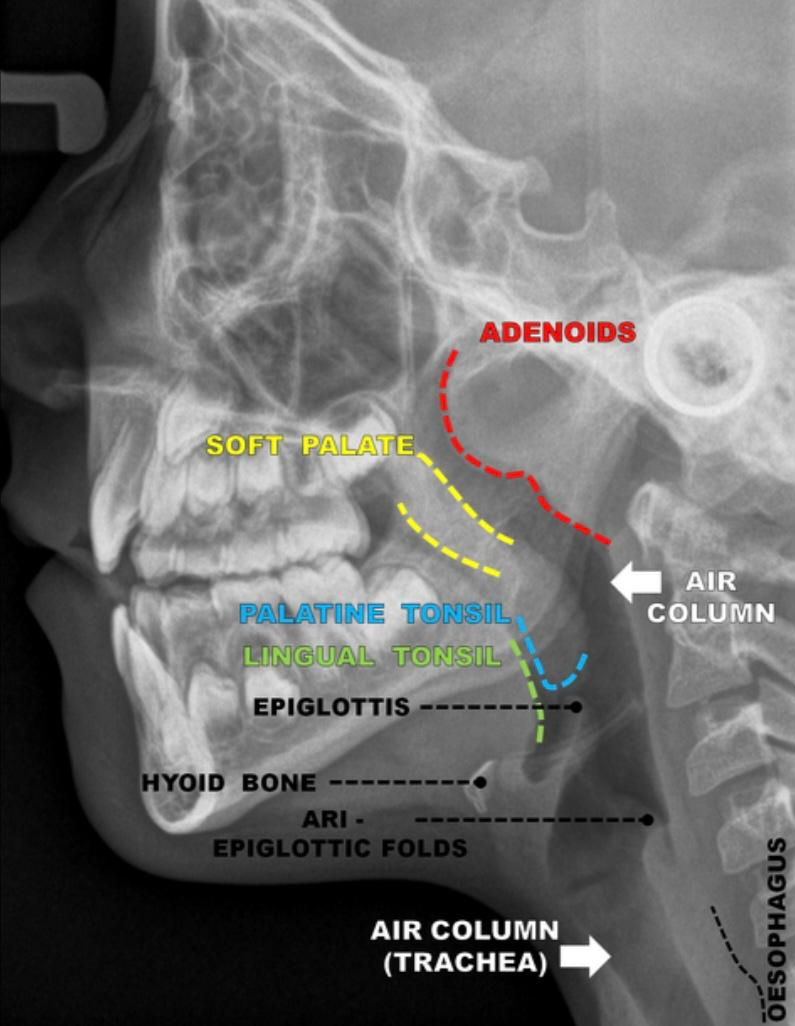
An Ear Nose and Throat specialist is needed to properly assess these. They don't just assess if these lymphoid tissues are infected and your child has recurrent infections, they look at the big-picture and how their airway influences the well-being, growth, diet, behaviour.
Before getting occupational allied health involved, everyone benefits from getting the basics tested: hearing test, allergy testing referred by your medical GP. These all form part of the big puzzle which is your child's airway.
Dental clinicians usually pick up on signs and symptoms more regularly even when the patient hasn't had obvious infections, is suffering in silence and the family is just under the impression "this is normal for them". When symptoms and signs make your dental clinician ask you about more detailed information, they may be suspicious of your child having Sleep Disorder Breathing. The questions we ask are usually on a questionnaire we ask you to fill out, similar to the ones earlier mentioned in this post.
Sometimes surgery is needed to reduce the size of the lymphatic tissues (adenoid and tonsils), turbinate size, grommets to help drain the inner ears.
Remember, a healthy child can grow, eat, thrive, sleep properly and adequately.


Comments